 Vršac is one of the most picturesque and atmospheric towns in Serbia, nestled in eastern Vojvodina in the legendary South Banat region. It’s deservedly known as the “capital of Serbian Baroque and winemaking.” I wrote this travel guide to Vršac to share not only the town’s top sights, but also its finest wineries, the charming village of Gudurica, and fascinating places nearby. Below, you’ll find tips on how to get to Vršac from Belgrade, how to plan a 1–3 day itinerary, and why this area is crowned the “roof of Vojvodina.”
- Top Things to Do in Vršac: Sights for 1-2-3 Days
- Wine Tourism in Vršac: Top Wineries, Gudurica Village, Tastings, and Wine Festivals
- What to See Around Vršac: Top Day Trips by Car
- How to Get to Vršac on Your Own
- Where to Stay in Town or Nearby
- Where to Eat — A List of Restaurants and Salaši
- Vršac at a Glance
If you’re wondering what to see in Serbia beyond Belgrade, Vršac is an ideal getaway. It’s best experienced either on a guided tour or on a self-guided couple-of-days trip, giving you enough time to explore both the historic streets and the local wineries.
Top Things to Do in Vršac: Sights for 1-2-3 Days
Vršac lies on the fertile Banat plain, just 14 km from the Romanian border. It’s compact and wonderfully walkable, though bringing a bicycle from Belgrade is another fantastic option. Here is a curated list of the top things to see in Vršac on a self-guided trip.
Town Streets and Squares
As I mentioned, Vršac is one of the most charming towns in Banat. Its architectural heritage spans several styles, prominently Baroque and Secession (Art Nouveau). Adding to the unique streetscape are the protruding bay windows known as kibitz fensters, from which local ladies used to watch passersby and discreetly flirt with young suitors back in the day. Be sure to stroll down Jaše Tomića Street (Jaša Tomić), lined with traditional Vojvodina-style townhouses. This street crosses Dvorska Street, the main thoroughfare just below St. Theodore of Vršac Square (Trg Svetog Teodora Vršačkog). Dvorska is home to both the Bishop’s Palace of the Banat Eparchy and the Serbian Orthodox Cathedral of St. Nicholas.


The City Museum and the “Pharmacy on the Stairs” (Apoteka na stepenicama) – 280,000 Artifacts
The City Museum houses rich archaeological, ethnographic, and fine art collections, featuring numerous 19th- and 20th-century paintings, among other treasures. The museum safeguards an impressive total of over 280,000 exhibits.

Much of the collection is displayed inside the “Pharmacy on the Stairs” (Apoteka na stepenicama), the town’s very first pharmacy, which operated continuously from 1784 to 1965. Located just north of Victory Square at the corner of Kumanovska and Stefana Nemanje streets, it features two core exhibitions: one dedicated to historic medicine and pharmaceutical history, and another honoring the celebrated Vršac-born realist painter Paja Jovanović, whose brother once worked in the pharmacy.
The Bishop’s Palace – The Only Baroque Episcopal Palace in Serbia
The Bishop’s Palace or Vladičanski dvor (Bishop’s Palace of the Banat Eparchy, location) is one of the grandest historic residences in Serbia and a cultural monument of exceptional importance. It is the oldest episcopal palace belonging to the Serbian Orthodox Church and the only surviving one from the Baroque era, dating back to either 1750–1757 or 1757–1763.

On the ground floor lies the Chapel of the Holy Archangels Michael and Gabriel, featuring an exquisite iconostasis crafted between 1761 and 1765. It represents one of the rare 18th-century iconostases in authentic Serbian Baroque style, adorned with an elaborate Tree of Jesse motif and opulent stucco molding. The ground floor hall is decorated with murals depicting seven Banat monasteries.
The Bishop’s Palace is renowned for its priceless icon collection and a historic library that houses rare manuscripts and early printed works, including the famous 16th-century Vadin Gospel (Vadinsko jevanđelje). It also preserves one of the most revered icons of Serbian Baroque art—the late 18th-century miraculous Mother of God of Vinča-Bezdin—as well as a rare 14th-century icon from Kyiv.
St. Nicholas Orthodox Cathedral (Saborna crkva) – The Town’s Oldest Orthodox Church
Right next to the Bishop’s Palace stands the Serbian Orthodox Cathedral of St. Nicholas (Saborni hram Svetog Oca Nikolaja), built in 1785 and consecrated during the tenure of Bishop Nikola Dimitrijević. The cathedral is crowned by an unusual bell tower with a narrow gallery terrace. Its interior was decorated by prominent Serbian painters:
- Pavle Đurković (the iconostasis),
- Nikola Nešković (standalone icons),
- Paja Jovanović (two exceptionally prized large canvases: “St. Nicholas Rescuing the Condemned” and “St. Angelina”).


St. Gerhard Roman Catholic Church (Rimokatolička crkva sv. Gerharda) – The Tallest Building in Vršac
This soaring Roman Catholic cathedral dedicated to Saint Gerhard was erected between 1860 and 1863. Designed in majestic Neo-Gothic style, it is the tallest and, in my eyes, easily the most awe-inspiring architectural landmark in Vršac. Its twin spires are visible from miles away across the plain. The Holy Trinity high altarpiece was painted in 1863 by Peter Johann Geiger of Vienna, while the rich interior wall frescoes were created by Budapest artist Antal Szirmai.


The Chapel of the Holy Cross (Kapela Uzvišenja Svetog Krsta) – The Oldest Building After the Tower
The oldest Roman Catholic sanctuary in the Banat region sits atop Miša Hill, overlooking Vršac. Setting aside the medieval fortress tower, this is also the oldest surviving building in town, constructed between 1720 and 1728. In the autumn of 1739, the local Catholic community added a votive chapel dedicated to St. Roch, the patron saint invoked against the plague that devastated Vršac that year following decades of Ottoman turmoil. In 2007, a belvedere lookout platform was built here, offering spectacular panoramic views of the town and the surrounding wine country.
Vršac Town Hall (Zgrada opštine Vršac)
 Vršac Town Hall was established after Serbian Vršac and German Vršac—which had developed as two separate municipalities since 1717—united into a single town in 1795. Construction of the present town hall began in 1859 at the initiative of Mayor Aleksandar Stojaković. Built in an elegant Neo-Gothic style, its foundation stone encases a memorial charter inscribed in Latin and Serbian, signed by all the town’s prominent dignitaries.
The Town Park
The Town Park (Gradski park) is one of the oldest public parks in Serbia, designated as a protected natural monument in 2000. Its layout masterfully blends circular geometric flowerbeds in the formal French style with the relaxed, rolling lawns, groves, and meandering pathways of a classic English landscape garden.
Vršac Tower (Vršačka kula) – The Fortress and Town’s Defining Symbol
The hilltop watchtower, often referred to as Vršac Castle (Vršačka kula or Vršački zamak), is the crowning remnant of the medieval fortress of Vršac and the undisputed emblem of the town. It is believed to have been built by Serbian Despot Đurađ Branković in the early 15th century. Constructed from stone and brick in typical Byzantine-style masonry, the keep rises four stories to a height of about 20 m. From the scenic viewpoint on the hill (399 m), you’ll be treated to the best panoramic vistas in the region, sweeping over the rooftops and across the endless Banat plains. The fortress is featured on our list of the top medieval fortresses in Serbia →


Vršac City Lake (Gradsko jezero Vršac)
On the outskirts of Vršac lies an artificial lake with mineral-rich, iodized water, serving as a cool oasis for locals during scorching summer days. The swimming season runs from early June through early September. The lake spans roughly 32,000 m², with water naturally enriched with iodine, sulfates, magnesium, and calcium maintained at a balmy 25°C. Throughout the summer season, the lakefront comes alive with sports tournaments, swimming classes, kids’ playgrounds, and open-air live music.
Vršac Hill (Vršački breg) and the Wine Villages at Its Base
The Vršac Mountains (Vršačke planine), locally known as Vršački breg, are the very reason this region is nicknamed the “roof of Vojvodina.” Beyond Vršac Tower, which I mentioned earlier, this range is treasured for its rich biodiversity and scenic nature trails. The ridge stretches for 19 km, with the greater part in Serbia and a smaller portion extending across the border into Romania.
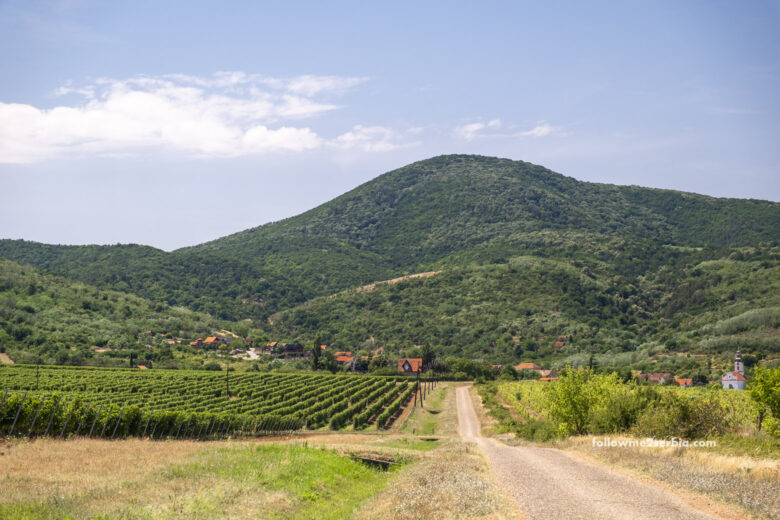
Gudurički Vrh (Gudurički peak), soaring to 641 m, is the literal “roof of Vojvodina”—the highest mountain peak in the entire province of Vojvodina. Standing at the top rewards you with breathtaking views across the border toward the Romanian Carpathians. It’s located just a 30-minute drive from town.
I highly recommend dedicating a full day to exploring the Vršac Mountains. The area is dotted with traditional Serbian taverns, scenic hiking trails, and well-marked cycling routes. I rented e-mountain bikes (e-MTB) from Biciklovac (location, here is their IG) and rode a gorgeous loop through the Vršac Mountains, stopping by the historic wine-growing villages of Gudurica, Malo Središte, and Veliko Središte. Part of the route winds through lush forest trails, while another follows a peaceful paved wine road between sunlit vineyards. It’s best to reserve your bikes at least a day in advance. Biciklovac mapped out these routes personally and can provide you with a sightseeing map and GPX tracks for your phone.


Wine Tourism in Vršac: Top Wineries, Gudurica Village, Tastings, and Wine Festivals

Grapevines have been cultivated around Vršac since the times of the Dacians and Romans. In the 19th century, Vršac grew into the largest supplier of wine to the Austro-Hungarian imperial court.
If you are traveling by car, be sure to take a detour to the village of Gudurica (known locally as “Vinsko selo” or the Wine Village), Malo Središte, and Veliko Središte, where wine is crafted in almost every home. Gudurica is home to the Vršac Vineyards cellar (podrum vršačkih vinograda)—one of the three largest wine cellars under a single roof in Europe, with the other two located in France and Spain. Built between 1964 and 1967, its foundation is shaped like the letter Y (for Yugoslavia). The cellar features five galleries—one underground and four above ground—and can hold up to 3,400 tons of wine.
Important tip: wineries in Gudurica are usually closed to casual walk-ins. If you want to enjoy a tasting, you should call and book at least one day in advance. I highly recommend visiting the Selecta winery.


If you don’t have time to tour the surrounding villages, you can enjoy great local wine over dinner right in Vršac at the rustic and atmospheric restaurant “Etno Kuća Dinar” (location).
The Vršac wine region offers a fascinating contrast: while there aren’t countless wineries here—around 20–25 active producers—the area boasts both colossal historical cellars and tiny, boutique family cellars. You can find a curated list of must-visit wineries in Vršac and beyond in my comprehensive “Guide to the Best Wineries in Serbia“.

Must-try grape varieties:
- Kreaca (kreaca) — an indigenous local white variety.
- Smederevka (smederevka) — celebrated for its crisp freshness. On hot summer days, locals love to drink it as a špricer (spritzer), mixing chilled white wine with sparkling mineral water in equal measure. It is a genuine symbol of a Banat summer.
If you’re planning a cellar tour, use this quick guide:
| What You’re Looking For | Recommended Winery |
| History and imperial grandeur | Drašković (Helvecija), successor to the legendary “Vršački Vinogradi” estate. They own the historic Helvecija cellar (built in 1880). The place impresses with its sheer scale and upscale restaurant. |
| Authentic wine village charm | Selecta in Gudurica, Nedin |
| Chivalric traditions and Bermet | Vinik, where the owner is the Grand Master of the Wine Order of Saint George. A great spot to sample the local Vršac version of Bermet. |
| Small family cellars | Vinarija Conte Vallonne |
What to See Around Vršac: Top Day Trips by Car
There are plenty of fascinating destinations around Vršac that can easily fill a couple of days of relaxed road-tripping.
- Mesić Monastery (Manastir Mesić) — one of the oldest and most significant nunneries in southeastern Banat. Believed to have been founded in the 15th century (and according to local tradition, as early as 1225). The monastery church, dedicated to the Nativity of St. John the Baptist, preserves valuable frescoes dating to 1743, alongside a notable collection of manuscripts and paintings.
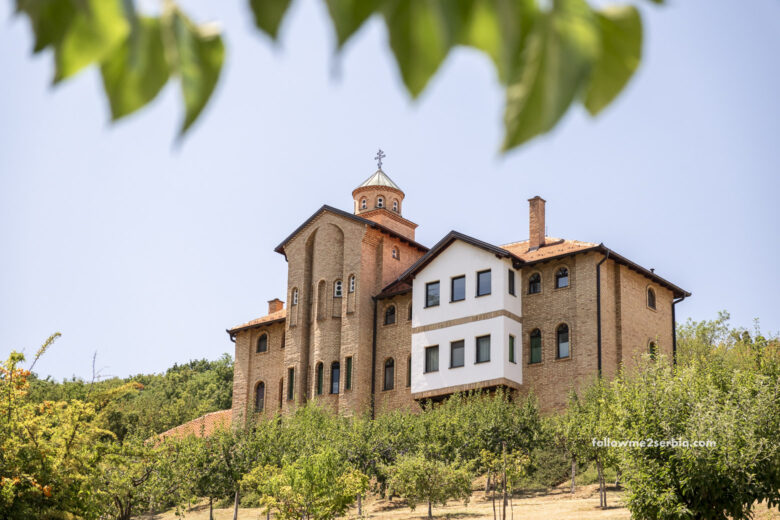
The monastery’s chief treasure is the miraculous icon of the Mother of God “Axion Estin” (Dostojno Jest). Brought to Vršac from Mount Athos in 1803, it rests upon an ornate throne and is venerated as the protectress of these lands. - Središte Monastery (Manastir Središte) — founded by Despot Jovan Branković at the end of the 15th century near the modern-day village of Malo Središte. Historically referred to as the Monastery of Archangels Michael and Gabriel, it was abandoned in the 18th century and fully rebuilt only in 1995. Today, it is an active men’s monastery.
- The Telephone Museum (Muzej telefona) in the village of Šušara, featuring a charming private collection of antique and vintage telephone equipment. It is open to visitors daily.
- Château Bissingen (dvorac Bissingen or dvorac u Vlajkovcu, location) — an abandoned manor house in the village of Vlajkovac, located just a ten-minute drive from Vršac.
The estate was built in 1859 by Count György Mocsonyi de Foen. It stands as an evocative reminder of Vojvodina’s Austro-Hungarian past, showcasing classical architecture with distinct symmetry and several engineering innovations modern for its era.
Locals consider the mansion to be haunted. A former caretaker recounted hearing soft whispers, knocking sounds, floorboard creaks, and footsteps in the dead of night. Legends also surround its final mistress, who inhabited the château prior to World War I. Having lost her husband at a young age, she led an eccentric, solitary life. According to local lore, at dusk she sat out on the balcony overlooking the grounds and used a pair of scissors to cut off her long hair.
Today, the mansion is completely open and abandoned. Sadly, time and neglect are taking their toll, and the building is slowly crumbling.
- Gudurica — the renowned wine village near Vršac. I highlighted Gudurica earlier, but here is an insider tip: consider renting a bicycle instead of driving there. That way, you can cycle along the old wine road winding through vineyards and, during high summer (I rode it in July), right through sprawling fields of bright yellow sunflowers.
- Lazarević Castle (Dvorac Lazarević, location) — actually two separate manors belonging to the Lazarević family in the village of Veliko Središte. The larger manor currently operates as a local primary school, while the smaller palace is undergoing restoration.


- Deliblato Sands Nature Reserve (Deliblatska peščara) — often referred to as the “European Sahara” or Europe’s last desert. I have shared practical travel tips and a complete 1-day itinerary in my Deliblato Sands travel guide.


- Bela Crkva and the Bela Crkva Lakes — a favorite summertime lake retreat among locals. Notable lakes include Lake Vračev Gaj (developed with beach infrastructure and family amenities), Šljunkara (the largest and noticeably quieter lake), Lake Šaran (beloved by local fishermen), and others. You can read all about what to do in my guide to Bela Crkva and its lakes, and if you are keen on fishing in the country, don’t miss our dedicated Serbia fishing guide.


How to Get to Vršac on Your Own
Vršac is located 84 km from Belgrade, 149 km from Novi Sad, and 75 km from Timișoara (Romania). The E-70 highway connects Belgrade and Timișoara straight through Vršac. The road is in great condition. The drive takes around 1.5 hours from Belgrade and 1.5 hours from Timișoara. Coming from Novi Sad by car will take approximately 2.5 hours.
If you ask me for the absolute best way to reach Vršac, here is my personal recommendation:
- Driving a car is by far the most convenient choice — it allows you to explore off-the-beaten-path manors, remote monasteries, and scattered wineries at your own pace. A fantastic 2- to 3-day round trip from Belgrade is to head out along the E-70 highway and return via the Bela Crkva Lakes and Pančevo. That gives you one night in town and one night at a winery estate—plenty of time for wine tasting, tandem paragliding, and hillside hiking. The simplest and most reliable sites to rent a car in Serbia are DiscoverCars and Localrent. For a thorough walkthrough of documentation, insurance, and road rules, read my article on renting a car in Serbia.
- For non-drivers, the train is hands-down the best option. Modern Stadler Flirt trains even feature dedicated bicycle racks, and Vršac is an exceptionally bike-friendly town. For specific rules regarding bikes on Serbian railways, check out my comprehensive guide on transportation in Serbia. In 2026, trains to Vršac depart from Belgrade Center (Prokop, 📍location) and Vukov Spomenik (📍location). These are modern, comfortable electric trains (Stadler Flirt). Travel time is approximately 1 hour 40 minutes, with departures scheduled several times a day. You can easily purchase tickets via the “Srbija Voz” mobile app.
- By bus. STUP Vršac is the regional bus carrier providing hourly connections to and from Belgrade and Novi Sad.
Where to Stay in Town or Nearby
Accommodation options here range from charming boutique properties downtown to cozy guesthouses nestled directly within winery estates (especially in Gudurica). If you are building an itinerary around wine tastings, it pays to book your spot early.
- Hotel Helvecija 1880 4* — an atmospheric heritage hotel featuring spa facilities and breakfast. Nightly rates are remarkably affordable for a property of this standard. View hotel on Booking.com →
- Hotel Serbia 3* — a renovated hotel right in the heart of town. Fantastic central location, complimentary breakfast, and a fitness room. View hotel on Booking.com →
- Park Hug — clean, well-priced apartments with private kitchenettes and on-site parking, all within easy walking distance of the town center. View apartments on Booking.com →
- Casa Rustic — a lovely villa situated right near the wine village of Gudurica. It comes complete with a wellness area, swimming pool, and its own wine cellar. Set in a quiet, idyllic rural location, it’s a wonderful spot to base yourself for a couple of days and unwind. View property on Booking.com →
- La Roue — a fresh, modern boutique mini-hotel offering comfortable rooms. I stayed here during my cycling trip across the Vršac Hill (Vršački Breg). It has on-site private parking and a welcoming communal area with a fridge and coffee machine. The rooms are compact yet perfectly equipped for a 1–3 night stay. View hotel on Booking.com →
Where to Eat — A List of Restaurants and Salaši
 Here is my personal list of saved spots straight from my Google Maps:
- Etno kuća Dinar (location)
- Salaš 9 (location)
- Kuća vina Rab (location)
- Butkica ko Lutkica (location) — traditional Serbian slow-cooked meat prepared under a sač (baking bell; learn more in this article).
All of the spots mentioned above serve Serbian cuisine, but there is also a Brazilian restaurant that gets glowing reviews: De Ferro Brasil (location).
Vršac at a Glance
When is the best time of year to visit Vršac?
Is Vršac a recognized spot for paragliding?
Are credit cards widely accepted in Gudurica wineries?
Can Vršac be visited as a day trip from Timișoara, Romania?
What unique local souvenirs can I buy in Vršac besides wine?
Do I need a mountain guide to hike to Gudurički Vrh?
Travel Guides to Other Towns in Vojvodina:
Novi Sad – Subotica – Kikinda – Bela Crkva – Pančevo – Zrenjanin – Sremska Mitrovica – Sremski Karlovci