When people list the things Serbia is famous for, food and national cuisine aren’t always mentioned. For tourists traveling in search of new experiences, it lacks a certain exotic flair. In Serbia, you’ll find many familiar dishes with different names, and at first glance, it might seem like there’s nothing interesting among them. But that’s not the case! Serbian national cuisine is rich and diverse, and even dishes that seem familiar by name or appearance can offer a new culinary experience.
Serbian Cuisine: 7 Things You Should Know
It’s hard to call Serbian cuisine entirely unique. It’s a blend of culinary traditions from the Mediterranean, Turkey, Austria, Hungary, Bulgaria, and other countries. But that only makes Serbian cuisine more interesting. Even borrowed dishes have taken on local characteristics that set them apart from their original versions.

In short, Serbian cuisine can be described as follows: filling, natural, and home-style. For the most part, Serbian dishes are rustic and consist of just a few ingredients. Complex seasonings aren’t really a thing—Serbs usually stick to black pepper, paprika, basil, onion, and garlic.
1. Balkan starters – meze
No authentic Serbian meal begins without a traditional Serbian meze. This generous appetizer platter is the ultimate icebreaker at any local gathering. A typical meze board is loaded with premium cured meats like pršuta, slices of sharp local cheeses, and generous scoops of creamy kajmak and ajvar. It’s the perfect Balkan starter to share with friends while sipping on your first glass of rakija.
2. Meat—the Main Dish
Meat is the undisputed cornerstone of the Serbian diet. Meat for breakfast, lunch, and dinner. Meat for a snack, as the main course, and as an appetizer. Fried, dried, stewed, or roasted. Meat, meat, meat.
Most often, it’s prepared on a spit (pečenje), on the grill (roštilj), or in thick-walled clay pots under a lid (“ispod sača”).


Dishes made with ground meat—such as čevapi or pleskavica—are also popular, as is meat prepared in large pieces (pršut—dried ham).


Here are a few more meat dishes popular in Serbia: slanina (similar to lard) and čvarci (greaves). Serbs jokingly refer to the latter as “Serbian popcorn.”


And since we’re on the topic of Serbian popcorn, let me show you some Serbian sushi as well:


Meat dishes are served everywhere in Serbia—at street stalls, in taverns (“kafana”), and in “domacha kuhinja” (“home-style kitchens”). But the main meat restaurants are the “pechenyara” (pečenjara, roast meat restaurants). These are eateries that serve exclusively meat cooked on a spit. Since “pechenje” takes a long time to cook, pechenyars usually start serving guests in the afternoon. Mladenovac, Arandjelovac, and Čačak compete for the title of the city with the best pečenje. I have friends from these cities, and they regularly argue about where the best pečenje is.


If you ask me which pečenja place is best, I’ve taken my parents and all my friends to the pečenja places in Čačak. The two most famous ones are Kod Brana (here) and Kod Dragise (here).
Tip: You can order the dishes by the gram rather than by the kilogram. For example, “300 gr of lamb and 300 gr of suckling pig” (300 gr of lamb and 300 gr of suckling pig).
If you’re not sure what you want, you can order “meseno meso”—a meat platter with several different meat dishes. Keep in mind—the weight of such a platter can exceed one and a half kilograms!
Must-Try Meat Dishes in Serbia
- Pechenje—a piglet or lamb roasted on a spit.
- Meat from under the “sacha”—meat prepared in a special way in a thick pot under a lid. It can be either lamb or veal.
- Karadjordje’s schnitzel—Serbs jokingly call it “a heart attack on a plate” or simply “meat stuffed with meat.” Traditionally, it’s a veal roll with kaymak, but prosciutto is often added inside the roll.
- Čvarci (greaves) are what Serbs call the “real” version of popcorn. Greaves come in two varieties here: regular and duvani čvarci.
- Pleskavica is the Serbian version of a ground-meat burger.
- Čevapi is another national fast food. These are small sausages made of ground meat, wrapped in pita bread. They are usually made with three types of meat: lamb, pork, and beef.
- Pršut is a cured ham. It is served as an appetizer and also added to dishes.
3. Food Culture of Regions: Vojvodina Cuisine vs. Traditional Cuisine of the Rest of Serbia
Serbian cuisine is a fascinating culinary crossroads. In Central and Southern Serbia, you can strongly feel centuries of Ottoman culinary influence, which brought grilled meats, rich spices, and strong coffee to local tables. Meanwhile, the northern region of Vojvodina boasts a rich Austro-Hungarian heritage, heavily leaning towards hearty stews, strudels, and complex dough-based desserts. This historical mix is exactly what makes Balkan food culture so unique and diverse.
Vojvodina is a region of Serbia that was formerly part of Austria-Hungary. The rest of Serbia was under Ottoman rule for about 500 years. Today, this is reflected not only in the different architecture but also in the distinct features of the language and cuisine. Čevapi and pleskavica are all dishes characteristic of the regions of Serbia that were formerly under Turkish rule. But as soon as you arrive in Vojvodina, goulash and papšikash appear on the menu, and langoš and kürtisch kalach are sold on the streets.
The most famous cities in Vojvodina are Novi Sad, Subotica, Zrenjanin, and Vrsac. In the kafanas and restaurants of these and other cities in Vojvodina, you’ll find dishes that aren’t available in Šumadija. While people in Central Serbia eat at kafanas and pečenjars, in Vojvodina, don’t hesitate to visit the traditional and colorful salash (salaš) and charda (čarda, a fish restaurant). Here’s what you absolutely must try in Vojvodina:
- Fish paprikash (riblji paprikaš)—a spicy fish soup with paprika. No, this isn’t riblja čorba. In Vojvodina, they even hold competitions for making fish paprikaš.
- Strudel (štrudla) is practically a symbol of Vojvodina. I never pass up poppy seed strudel when I visit Vojvodina. Just look at how much poppy seed is in it! (photo below). There are also versions with plums, apples, and seasonal fruits and berries.
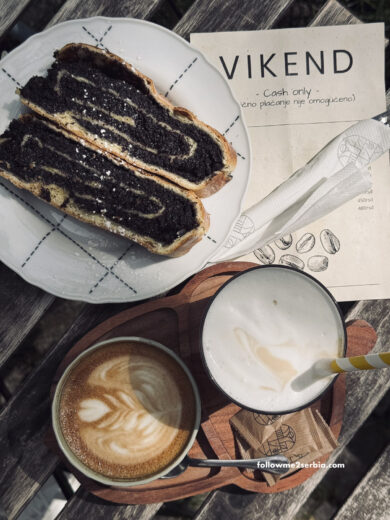
- Chicken noodle soup (vojvodjanska pileca supa sa rezancima) isn’t like thick Serbian čorba. It’s a soup with clear broth and noodles. My friends from Šumadija say that the noodles in Vojvodina have a special flavor, and the chicken soup itself is so good you’ll want to eat every last spoonful.
- Rinflajš—meat stewed with vegetables in horseradish sauce 😀 They say this dish is very good for the stomach because of the horseradish.
- Rezanci sa makom—sweet, wide noodles with poppy seeds.
In addition to all of the above, Vojvodina differs from the rest of Serbia in its rich selection of fish dishes. There are many fish restaurants along the Danube, called “čarda.” They offer a wide selection of fish, and you can even find farmed sterlet, which is prohibited from being caught in the wild (more on fishing regulations in Serbia). In addition, competitions to see who can make the best fish soup are held throughout Vojvodina all summer long. Here are some places I can recommend for trying fish dishes in Serbia:
- Ribarski Ostrvo (Ribarski ostrvo, location) — Fishermen’s Island in Novi Sad. There are many čardas and seafood restaurants there, all with excellent reviews. My friends recommended Kucerak na Ribarcu (location). There, I had one of the best riblja čorba (fish soup—more on that below) with noodles (rezanci) of my life. I haven’t had čorba like that anywhere else in Serbia.
- Carda na jami (location) — a charda near Novi Sad in the Begečka Jama Nature Reserve. They have an excellent seafood menu here. It’s one of the few places where you can eat sterlet.
- Carda kod Antusa (Carda kod Antusa, location) – a charda near Subotica. Here, they prepare riblja čorba the traditional way over an open fire. That’s probably why it’s considered the best in Serbia.
The issue of portion sizes in Serbia is quite a pressing one. An average portion of any dish is usually enough for two people. Therefore, if you wish, you can ask for a half portion—and sometimes you’ll need to, considering that leaving uneaten food on your plate is considered impolite. On the other hand, they’ll gladly bring you seconds—for example, bread and other baked goods served with the main course are usually charged per item rather than per serving and are offered in unlimited quantities.
4. Seasonality: Winter Menu, Summer Menu, and Lenten Menu
Another distinctive feature of Serbian cuisine is seasonality and fasting periods. Serbian cuisine features not only seasonal dishes but also dishes that are exclusively summer or exclusively winter fare. For example, svadbarski kupus is prepared in the summer and fall in Šumadija, while peglana kobasica is served only in the winter in Pirot.
The Lenten menu deserves special mention. Restaurants, kafanas, and even bakeries add Lenten dishes to their menus during Christian fasts.
❄️ Serbia in Winter—What You Need to Know and Is It Worth the Trip?
Winter in Serbia isn’t just about snow and mandatory winter tires—it’s also about the winter menu. In kafanas and restaurants, you can order kuvano vino and kuvana rakija, sarma, smoked carp, zimnice, and tursija. Here are a few staple dishes of Serbian cuisine in winter:
- Tursija is pickled vegetables. Most often, these include peppers, cucumbers, tomatoes, carrots, and cabbage. The vegetables are placed in large glass jars and covered with a solution of water and salt. You can buy tursija in jars at markets.
- Sarma (sarma) is a Serbian dish of stuffed cabbage rolls, typically prepared during the winter. What sets them apart from our stuffed cabbage rolls is that the ground meat is wrapped in sauerkraut. You can also find a vegetarian version of sarma, which is usually served during the Lenten period.
- Smoked carp (dimljeni saran) is smoked carp. It is usually smoked in the fall and served during the cold season, especially on Lenten holidays. In winter, dimljeni saran is sold at fish stalls in markets. You can easily spot smoked carp at local green markets like Kalenić in Belgrade.
- Zimnica refers to homemade preserves: jams, pickles, and marinated vegetables.
- Podvarak (podvarak) is boiled sauerkraut with meat or fish.
- Kuvano vino (kuvano vino) is Serbian mulled wine. It’ll soon be available at all the pre-New Year’s night markets.
- Kuvana rakija is hot . It warms you up quickly—and can be deadly—so be careful 🙂 It’s used as a powerful antiviral during the cold season.


5. Soups and Čorba
In Serbia, soups are held in very high regard—it’s believed that you should eat them at least once a day. There are two main types of soups:
- Supa—a thin soup made with clear broth. This type of soup is rarely filling. It usually contains a variety of vegetables and sometimes noodles. Vojvodina is famous for its soups. The most famous soup there is chicken soup with noodles (I mentioned it above).
- Čorba is a thick soup made with roasted flour. Čorba can include a variety of ingredients. Sometimes you’ll find unusual ones—for example, with plum juice, wine, eggs, or sour cream. A real chorba should be very thick and have a slightly sour taste.
Depending on the type of meat and broth used, chorbas are classified as “lamb,” “veal,” and other varieties. “Fish chorba”—a red fish soup—stands apart. Tomato paste and hot paprika are added to it, giving it a rich orange-red color. Take a look at the photo: even the pictures convey how thick the soup is. The best fish chorba in Vojvodina can be found in the chardas along the banks of the Danube. I’ve listed three places to try fish chorba earlier in this article.


6. Bread
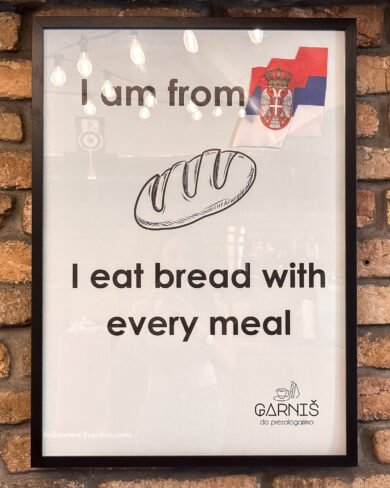
When it comes to local dining etiquette, there is one golden rule: bread (hleb) is sacred. One of the most fascinating Serbian eating habits is that locals consume bread with almost every meal, even if the main dish already includes potatoes, rice, or pasta! It’s used to soak up every last drop of delicious sauces and broths from your plate, which is considered the ultimate compliment to the chef.
7. Pastries and Bakeries

Serbian cuisine also includes a wide variety of baked goods, which I’ll discuss further below. Serbian pastries have a distinctive feature—they’re usually made with puff pastry, and no sugar is added to the dough. Because of this, many types of pastries come in both savory and sweet versions, depending on the filling.
Pastries and desserts in Serbia are very diverse and are served everywhere—from street stalls to kafanas to high-end restaurants. But the best place to buy and taste them is at pekaras.
A pekara is a shop specializing in baked goods and/or other flour-based snacks. For example, the popular Belgrade pekara “Hleb & Kifle” sells sandwiches and cakes. You can also get drinks at pekaras—tea, coffee, juices, and yogurt.
Pekaras sell pastries with a wide variety of fillings—sweet, savory cheese, and meat.
In addition to the pastries and sweets already listed above, Serbian cuisine features dozens of other equally important items. Here are some of them:
- Lepinja—a flat, round bread baked in a very hot oven, which causes it to split into two layers. This pocket is perfect for stuffing with fillings, a trick street food vendors take full advantage of.
- Burek—a type of layered pastry with a filling. It’s usually baked as a large, round burek made from dough consisting of flour, water, and salt, which is later cut into slices and served individually. Burek fillings vary widely—from the classic meat or cheese to apples, cherries, mushrooms, and even “Nutella.” I wrote more about burek and where to try it in my article “Top Dishes to Try in Serbia.”

- Proja is bread made from corn flour. It once saved Serbian peasants from starvation but has remained popular even in more prosperous times. The traditional recipe includes flour, salt, baking soda, and sunflower oil, but nowadays milk and eggs are also added to proja.
- Pita is somewhat similar to burek, but it’s made with puff pastry. The most popular fillings are meat, cheese, cherries, and spinach.
- Potica is a roll with a nut filling, in which the ratio of dough to filling—1 to 1—is strictly observed. It’s a complicated and expensive recipe to make, so it’s traditionally prepared for holidays. There is an even more exotic variety of potica—one made with tarragon.
- Koh is a light cake made from semolina and whipped egg whites. It is soaked in milk or milk cream and chilled in the refrigerator. Koh is eaten with a spoon, like ice cream, and fruit is sometimes added.
- Krofne are round doughnuts filled with jam, chocolate, cinnamon, or Nutella. There’s a festive New Year’s version filled with rum and lemon zest. Savory krofne are somewhat less common—for example, those filled with mustard.
Tasting Serbian Cuisine: Best Local Food Tours and Independent Exploration
When it comes to experiencing Serbian food, you have two great options:
1. Go DIY and explore on your own. You can build your own itinerary, wander through green markets, and hunt down authentic kafanas. By the way, I’ve already put together the ultimate checklist for your DIY adventure:
👉15 Serbian dishes you absolutely must try.
2. Take a guided local food tour.
If you want to learn the history and cultural details firsthand, joining a local guide is a fantastic idea. Here is a curated list of excellent gastronomic tours available in Serbia (all based in Belgrade and conducted in English):
- Culinary Tour: get to know serbian Food. Come Hungry! Detailed description →
- Food & Culture tour in Belgrade. Learn details →
- Gastronomic tour of Belgrade on electric scooters. Learn more →
- Food tasting at Locals Favorite Farmers Market. Details →
- Black Gold on a Plate – Serbian Truffle Experience. See details →
- Street Food and Drinks Tour with 20+Tastings. Details →
Fish and Vegetarian Dishes—How Vegetarians, Vegans, and Pescetarians Can Get By in Serbia
Serbia is definitely a meat-loving country. Virtually every dish on the menu contains meat. But Serbs are quite religious and observe fasting periods, meaning they abstain from certain foods. That’s why restaurant menus, kafans, and bakeries always offer vegetarian options—without meat, eggs, or milk. Vegetarian dishes are usually marked with the word “posno.”
The selection of vegetarian products is good only in Belgrade or Novi Sad and only in large stores.
Fish is more commonly found on menus in Vojvodina than in Central or Southern Serbia. These regions are known for their meat-based cuisine, and finding anything meat-free on the menu—or even just trout (pastrmka)—is a real stroke of luck.
What else do Serbs eat?
In addition to meat, Serbs eat vegetables—both raw and cooked—as well as fermented dairy products. Aivar (a paste made from roasted peppers with spices, sometimes with the addition of eggplant or tomatoes) and kajmak (salted cream fermented using a special process) are especially popular as side dishes or on their own. Potatoes are also eaten here—fried or baked, with a crispy crust.

Despite the large portions and natural ingredients, food prices in Serbia are quite low. At the same time, industrial production—of ajvar, kajmak, and other products—has barely developed. It’s believed that only home cooking can achieve the right flavor.
Tip: Serbians are incredibly passionate about where their food comes from, making the local green market (or pijaca) the heart of any neighborhood. Long before the farm-to-table trend became globally popular, Serbs were already buying fresh, organic produce and locally sourced ingredients directly from farmers. If you want to see this culture in action, visit a bustling pijaca (like the famous Kalenić market in Belgrade) early on a weekend morning.
You definitely should try the most unusual Serbian drink—boza. Boza is made from corn; sometimes wheat flour and sugar are also added. The fermentation process results in a sweet drink the color of warmed milk, which can be sprinkled with cinnamon if desired. Boza is considered very healthy thanks to its high content of vitamins A, E, and B, as well as bacteria that improve digestive health. Its alcohol content is low—about 1%
🍷 I wrote about what Serbs drink in a separate article on alcohol in Serbia →
Serbia’s Street Food Culture
The main motto of Serbian cuisine is “cook slowly and eat slowly.” Despite this, the streets of Serbian cities are lined with dozens of stalls, stands, and small shops selling street food and fast food.
Street food in Serbia ranges from roasted chestnuts and popcorn (kokice) to hamburgers and pizza. All of this is exceptionally delicious in Serbia thanks to high-quality ingredients and the Serbs’ expertise in preparing meat.


The most popular street food in Serbia is meat-based. These are the same ćevapčići, pleskavica, and other grilled meat dishes, only they’re served not on plates but in a bun or lepinja, with kajmak, ajvar, roasted peppers, and other toppings.
To get acquainted with street food, I recommend taking one of these tours:
- Street Food in Belgrade—A 3-hour walking tour with Serbian street food tastings. Learn more →
- Rakia + Street Food—a walking tour with rakia and street food tastings in Belgrade. Learn more →
- Street Food and Drinks Tour with 20+Tastings. Details →

Palačinke (pancakes) with various fillings are just as popular. In some cases, the pancakes aren’t fried in a pan but baked in an oven, which makes them even tastier.
If you’re in the mood for a sweet snack, it’s also worth stopping by one of the bakeries with a wide selection of pastries—including burek, gibanica, and pita, all sold by the slice.
Portions of street food in Serbia are very generous, and prices are low, especially compared to the European average. You can also buy inexpensive, perfectly brewed coffee on every corner. If you’re having something particularly filling, it’s worth ordering some unsweetened drinking yogurt—it aids digestion.
If you have a sweet tooth, don’t miss the poslastičarnice—Serbian pastry shops.

Street food in Serbia is an integral part of the national cuisine. It’s simply impossible to walk through the streets of Belgrade without seeing a Serb munching on something from a pekara or fast-food joint!