The number one question I get as soon as the weather turns cold is: “Is it really worth visiting Belgrade in winter?” After all, the winter months – November, December, January, and February—are rarely considered prime time for a trip to the Serbian capital. The short answer: absolutely, yes. In this guide, I’ll share an honest take on what to expect from Belgrade in winter: what the weather is actually like, holiday hours for shops over New Year’s and Christmas, where to find the best holiday markets, and what to do when the weather outside isn’t cooperating.
- Is It Worth Visiting Belgrade in Winter?
- Belgrade Winter Weather: What to Expect and What to Pack
- Budget and Prices in the Serbian Capital in Winter
- Where to Stay in Belgrade in Winter — The Most Convenient Neighborhoods for Tourists
- Public Holiday Calendar: Opening Hours Over New Year and Christmas
- Belgrade’s Top Winter Holidays – New Year and Christmas: Where to Go, What to See, and When
- Winter Festivals and Events in Belgrade Worth Attending
- Winter Day Trips, Tours, and Walks in and Around Belgrade
- What to Do in Belgrade in Winter During Bad Weather (Snow, Rain, Košava Wind)
- What to Eat and Drink in Belgrade in Winter
- Belgrade Transportation and Logistics in Winter
- Frequently Asked Questions About Visiting Belgrade in Winter
Belgrade in Winter at a Glance
- Weather: from -2°C to +12°C; little snow, relatively mild and sunny. The defining weather feature is the Košava wind.
- Prices: lower than in summer (with the exception of New Year’s Eve/Day).
- Key quirk: January 1, 2, and 7 are public holidays when almost everything is closed.
- Perks: zero tourist crowds, comforting winter food, and plenty of thermal spas just a 1–2 hour drive away.
Is It Worth Visiting Belgrade in Winter?
Besides the obvious downsides (chilly weather, overcast days, short daylight hours), winter in Belgrade comes with a ton of perks. The biggest one? The total absence of tourist crowds. You can stroll through the Kalemegdan fortress in peace, walk straight into museums without waiting in lines, and effortlessly grab a spontaneous table at popular Skadarlija restaurants that are booked out weeks in advance in summer.
A second reason to visit in winter is the food scene and the cozy warmth of Serbian kafanas. It’s only during the colder months that you can truly appreciate the warming kick of hot kuvana rakija (mulled rakija), a hearty plate of piping-hot sarma, and the rich variety of homemade zimnica (pickled preserves).
The third reason is, of course, the prices. I’ll break these down in detail below, but spoiler alert: they’re very budget-friendly.
The fourth reason is the spas (banje). There are several thermal spa resorts and wellness retreats around Belgrade where you can soak in outdoor heated mineral pools even in the dead of winter. Absolute bliss!

Belgrade’s Biggest Winter Concerns: Smog and Cigarette Smoke
Let’s tackle the two biggest winter concerns people bring up about Belgrade. First up: the smog.
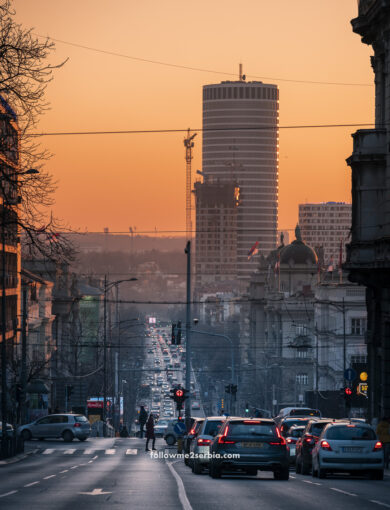
Smog (air pollution) is indeed a persistent issue in Belgrade during the winter months. However, over the past couple of years, things have been improving: the city distributed free heating filters to households, making the air noticeably easier to breathe. While this isn’t true for every single neighborhood, the central districts where most tourist sights are located have seen significant improvement.
Cigarette smoke in restaurants and cafes is still common in winter. Unfortunately, that’s just the reality. While bars and nightclubs are still virtually all smoke-filled, dining spots have seen positive changes. In recent years, more and more places across Belgrade have banned indoor smoking entirely or at least introduced dedicated non-smoking sections.
Belgrade Winter Weather: What to Expect and What to Pack
I’ve been living in Belgrade for over 5 years now, which means I’ve experienced winter here in all its forms. Here’s what you need to know about winter weather in Belgrade:
- In November, Belgrade can treat you to glorious mild weather with pleasant highs around +15°C and occasional light rain—or it can suddenly get hit by the brisk Košava wind.
- Overall, winter in Belgrade is fairly mild and sunny. You’ll definitely get gray days, occasional rain, or snow that melts almost the moment it touches the pavement. In January, it’s often warm enough during the day to sit outside on a patio and sip coffee.
- Snowy days have become increasingly rare in recent winters. A picture-perfect snowy winter is the exception rather than the rule; rain is far more common than snow.
- The Košava—a strong, icy wind blowing in from the Carpathians—is Belgrade’s signature winter trademark. When the Košava blows, it usually lasts for 1, 3, or 7 days. Even bright, sunny days can feel bitterly cold when that wind picks up.

Month-by-month breakdown:
- November in Belgrade often feels like an extended golden autumn. Daytime temperatures are mild enough for a light jacket or cardigan, but early mornings, evenings, and nights get chilly, dropping down to around +5°C.
- December in Belgrade is the cloudiest month with the shortest daylight hours. On the upside, you get atmospheric fog rolling over the Sava and Danube rivers.
- January is mostly crisp and clear, with sunny above-freezing days alternating with gray, overcast spells. You might see some light snowfall.
- February brings occasional snow and more unpredictable, shifting weather. On the bright side, the days start feeling noticeably longer.
Browse the gallery below—the photos were taken across different months, with captions indicating which winter month you’re looking at:


What should you wear? For travelers, I always recommend a versatile setup: a long windproof jacket, a cozy scarf, and warm gloves. Bring winter footwear with slip-resistant soles—the historic cobblestones in the city center, especially in the bohemian quarter of Skadarlija, quickly turn into a skating rink when covered in wet slush.
Personally, I swear by layering: outside you’ll need solid protection from the wind, but kafanas, museums, and shopping malls crank their heating to full blast, so it’s best to wear a light sweater or T-shirt underneath.


Budget and Prices in the Serbian Capital in Winter
The biggest perk of visiting Serbia in winter is affordable flights to Belgrade. I covered all the ways to reach Serbia in this dedicated guide—including direct flights, layovers, and even an insider hack via Niš that not many travelers know about.
November, the first half of December, mid-to-late January (after the 13th), and February are low season, meaning accommodation prices in Belgrade drop by 20–30% compared to summer, and car rentals cost next to nothing.
During the winter months, you can rent a car on Discover Cars for as little as 30 € for 3 days. To learn all about rental conditions and driving requirements in Serbia, check out my full guide here →
Many walking tours in the Serbian capital also offer off-season discounts. For tours with an English-speaking guide, check out the options on this page →
Shopping centers also roll out heavy discounts, with seasonal sales running practically all winter long.
Airfares from Belgrade to neighboring countries drop significantly as well, making this a fantastic season for slow travel.
Food prices in Belgrade, meanwhile, remain steady year-round (unlike neighboring Montenegro, where peak summer brings price hikes not just on parking and rent, but on basic supermarket groceries too).
Where to Stay in Belgrade in Winter — The Most Convenient Neighborhoods for Tourists
In winter, it’s best to base yourself in Dorćol, Stari Grad (Old Town), or Vračar so that everything is within easy walking distance. I’ve broken down Belgrade’s neighborhoods in detail in my Belgrade city guide. Here are several great accommodation options for December, January, or February:
- Parlament Apartment — stylish apartments in a stellar location right behind the National Assembly of Serbia (Skupština). My friends stayed here and loved it.
- Sanja Old Town Apartment
- Kopernikus Hotel Prag 4*
- Hotel Balkan 4*
- Belgrade Inn Garni Hotel 4* — features private on-site parking in the city center, breakfast, a spa, and a gym.
- You can view all available tourist accommodation in Stari Grad and Dorćol via this link →
The single most important factor for winter accommodation in Belgrade is heating. If you prefer apartments or vacation rentals over hotels, always make sure the place has central heating rather than just relying on an AC unit set to heat mode.
If you’re visiting Belgrade for just a few days, booking a hotel with its own spa makes a world of difference. Here are some top-rated hotels featuring great wellness centers:
- Lumiere Hotel Pool & Spa 4* — a modern hotel in the Old Town. Superb location and an excellent wellness center for unwinding on chilly days. Hotel page on Booking.com | Hotel on Trip.com
- Hotel City Savoy 4* — also located right in the Old Town, complete with its own dedicated wellness center. Hotel page on Booking.com | Hotel on Trip.com
- Hotel Mona Plaza 4* — a prime location in Dorćol (Old Town), with restaurants and central sights within walking distance. Features an on-site wellness center, fitness facility, and top amenities. Hotel page on Booking.com | Hotel on Trip.com
Public Holiday Calendar: Opening Hours Over New Year and Christmas
Visitors often get caught off guard by the Orthodox holiday calendar. In Serbia, Christmas (Božić) is celebrated on January 7, and Christmas Eve (Badnje veče) falls on January 6. This creates a very specific holiday schedule across the city.
How shops and restaurants operate:
- December 31 and January 6: nearly all supermarkets, cafes, and administrative offices close earlier than usual (around 18:00).
- January 1, 2, and 7: these are official state holidays. Supermarkets (including major chains like Maxi and Idea), shopping malls, banks, exchange offices (menjačnice), post offices, government institutions, most museums, and many restaurants will be completely closed. Make sure you stock up on groceries in advance!
- January 13: Serbian New Year (Old New Year). Expect shortened working hours; some museums, banks, government offices, and exchange booths will be closed.
Belgrade’s Top Winter Holidays – New Year and Christmas: Where to Go, What to See, and When
The two biggest winter holidays in Serbia’s capital are New Year’s and Christmas. Serbs celebrate them with their own unique traditions, and here is everything you need to know about experiencing them.
Where to Find Christmas Markets and Festive Vibes in Belgrade
From early December, ice rinks and Christmas markets pop up all across Belgrade, while cafés and restaurants dress up their winter courtyards and welcome guests inside. Fairy lights and festive illuminations brighten up the main streets.
Here is a list of the most popular holiday spots every year:
- “Winter Fairy Tale” (Zimska bajka) in Belgrade Waterfront (Beograd na vodi) — the city’s premier modern Christmas market location. You’ll find an ice rink, street food stalls, mulled wine, and live music.
- The Market on Republic Square (Trg Republike) and the festively decorated Knez Mihailova Street — classic holiday markets packed with souvenirs, street food, and mulled wine. Make sure to stroll down Knez Mihailova Street (ul. Knez Mihajlova) in the evening to catch the brass bands (trumpeters). On New Year’s Eve, they even dress up as Santa Claus! By the way, the square right outside the National Museum is one of the best spots to ring in the New Year — they set up a massive Christmas tree, a concert stage, and a mini-market serving food and warm drinks.
- Café “Vukov božićni kutak” (Vuk’s Christmas Corner, location) — hands down the most popular festive café during the holiday season thanks to its incredible, fairy-tale atmosphere. People literally line up outside just to grab a table and soak up the holiday spirit.
- Ice skating rinks in Tašmajdan Park and outside the Ušće Shopping Center.
- Zemun’s holiday market and ice rink right on the main square.
- Winter Street Food (Zimski Street Food) — an open-air food market in the Saints Cyril and Methodius Park near Vukov Spomenik in the Vračar district. It runs from mid-December through early January.


Božić (Orthodox Christmas) in Belgrade: What to Know and Where to Go
The peak of Christmas celebrations in Serbia takes place on Badnji Dan (Christmas Eve), on the evening of January 6. Serbs gather in church courtyards to burn traditional bonfires made of young oak branches. Leading up to this, you will see oak branches called *badnjak* sold at practically every market stall in Belgrade.
The most spectacular place in the city to experience this is the Church of Saint Sava on Vračar. Come after 6:00 PM. It is an incredibly atmospheric, heartwarming, and authentic tradition joined by thousands of locals.


Winter Festivals and Events in Belgrade Worth Attending
Winter in Belgrade is far from a dead season. The Serbian capital is always buzzing with life. Here are several events and festivals definitely worth putting on your radar:
- EuroLeague Basketball — EuroLeague basketball matches take place all winter long at the iconic Belgrade Arena. If you’ve never experienced Serbian basketball fans, I cannot recommend attending at least one game enough. I go regularly, and the passion, chanting, and sheer energy are an unforgettable spectacle. Here is my guide how to experience Euroleague in Belgrade → It’s worth noting that two Serbian powerhouses compete in the EuroLeague – Crvena Zvezda (Red Star) and Partizan. Their head-to-head matches are known as derbies, and they are the most electric home games of all. There are even organized small-group outings to them; you can check the schedule on GYG (small groups of up to 5 people with english-speaking gide) and find more details via this link.

- Belgrade Film Festival (BFF) — a premier winter film festival running in late January and early February. The festival showcases a carefully curated selection of contemporary world cinema, spanning auteur cinema and gripping dramas to genre films, celebrating both acclaimed international masters and debut directors. Locals snap up tickets in the blink of an eye, so don’t hesitate — if a title catches your eye, book your tickets right away.
- Auteur Film Festival (FAF, Festival autorskog filma) — one of the most prominent events for indie and arthouse cinema lovers. It features award-winners from Cannes and Berlin, alongside avant-garde pieces and bold artistic statements. It takes place in late November and early December.
- Belgrade Night Market (Beogradski noćni market) — much more than an ordinary night market; it’s a full-on street party with local delicacies, craft drinks, design stalls, and live DJ sets held at traditional green markets across the city. Follow their Instagram @belgradenightmarket for upcoming dates and venues.
- Belgrade Winter (Beogradska zima) — the city’s official winter festival, running from late December through late January. It offers an extensive entertainment program for both kids and adults, featuring free open-air theater performances, classical and jazz concerts in central squares, and cultural events hosted across local institutions.

Winter Day Trips, Tours, and Walks in and Around Belgrade
I have already put together an extensive guide to the top sights and attractions in Belgrade, but in winter, some outdoor locations close down or operate on reduced winter hours. Here is a curated list of tours and walks in Belgrade that are genuinely worth taking during the winter months:
- Belgrade city walking tours — best reserved for crisp, clear days. These are typically relaxed 2-to-3-hour strolls through the historical center, leaving plenty of time to pop into a cozy café afterwards to warm up. You can check out English-guided walking tours here.
- Food and wine tasting tours — a fantastic choice no matter the weather, as tastings of traditional Serbian delicacies, rakija, and local wines take place in warm, indoor taverns and wine cellars. Here is a curated collection of food & tasting tours in Belgrade →
- A day trip to Sremski Karlovci for wine tasting — the ideal excursion for short winter daylight hours. A gentle stroll through this charming baroque town combined with a cellar tasting, with most tours also including a stop in Novi Sad. Check out this guided small-group tour in English.
- A trip to Oplenac to discover the history of the Serbian Royal Karađorđević dynasty. It’s an easy, fascinating winter getaway. Here is a link to a small-group English-guided option.
- A scenic train ride to Subotica, one of the most picturesque cities in Serbia. Nestled right near the Hungarian border, it’s renowned for its breathtaking Hungarian Art Nouveau (Secession) architecture. Here is my complete guide to Subotica with practical directions on how to get there and what to explore.
- A river cruise along the Sava and Danube rivers (weather permitting, usually running when days are calm and clear). Use this link to check cruise availability and schedule.
What to Do in Belgrade in Winter During Bad Weather (Snow, Rain, Košava Wind)
Wandering around Belgrade for eight straight hours like you might do in summer simply isn’t an option on freezing or windy winter days. You’ll definitely want great indoor activities where you can linger in warmth.
- Museums — the ultimate sanctuary from harsh weather. Belgrade is home to over forty museums, many of which are truly one of a kind. I’ve covered the standout spots in my guide to the “Best Museums in Belgrade”. Be sure not to miss the grand National Museum of Serbia, the interactive Nikola Tesla Museum, and the brand-new science center Palata Nauke.
- The Gastroshore food district. If you’re craving a trendy urban vibe, head over to Gastroshore near the Danube port. It’s home to Docker Brewery with 32 craft beers on tap, along with an eclectic mix of eateries and bars where you can bar-hop between venues with only a few steps out in the cold.
- Cetinjska Street. The go-to spot for evening bar-hopping. Often dubbed Belgrade’s “mini-Berlin,” this former brewery complex is packed with alternative bars, quirky craft pubs, and cool music spots.
- Go shopping at Galerija Shopping Mall (TC Galerija). This is the largest mall not only in Serbia but in the entire Balkans. You can effortlessly spend an entire rainy day browsing its shops — especially since December and January bring major holiday discounts. It also boasts dozens of restaurants, an extensive food court, a massive cinema, kids’ play zones, and lounge areas. Tip: before hitting the stores, read my guide on “How to Claim Tax Free (VAT Refund) in Serbia”. By the way, an indoor footbridge connects Galerija directly to one of Belgrade’s newest attractions: the Belgrade 360 Deck observation platform inside Kula Beograd.
- Unwind at a thermal spa (banja). There are several wonderful thermal spa towns (known as *banje*) located within easy reach of Belgrade (I’ve detailed them thoroughly in this article) where you can spend a deeply restorative winter day. You can rent a car and head out for a day in Vrdnik (or spend the night at Fruške Terme), soak in the open-air +40°C pools at Termalna Rivijera in Bogatić, or book a guided day trip to warm up in the pools of Bukovička Banja in Aranđelovac. Here are several popular guided thermal day trips: a relaxing day in Bogatić, Kruševac and Vrnjačka Banja, or Aranđelovac and Bukovička Banja. These tours are cleverly designed: you visit a couple of cultural sights first, then spend 3 to 4 blissful hours soaking in the thermal pools.

What to Eat and Drink in Belgrade in Winter
Winter in Serbia is all about enjoying sarma and zimnica, paired with kuvana rakija or kuvano vino. Come wintertime, Serbs traditionally switch over to a hearty winter menu—something I detailed in my extensive guide, “Guide to Traditional Serbian Food & Cuisine.” Street corners fill with the aroma of roasted chestnuts, while grilled corn stands vanish until summer. Kafanas and restaurants roll out seasonal winter dishes alongside fasting (posno) specials: winter is a season of major Orthodox holidays and family slavas.
Here is what I definitely recommend trying if you visit Belgrade in winter:
- Kuvano vino and kuvana rakija. Serbian mulled wine and hot slivovitz (plum rakija) are the ultimate warming drinks at Christmas markets. You can grab a cup at any night market or traditional kafana. A particularly popular spot is the winter market right outside the Rajićeva Shopping Center on the pedestrian Knez Mihailova Street in the city center.
- Čorba and sarma. These are true Serbian winter comfort staples. The best place to enjoy them is in the authentic kafanas along the bohemian quarter of Skadarlija. Čorba is a rich, thick soup that warms you up down to your toes, while sarma—cabbage rolls stuffed with minced meat and rice, made with fermented sour cabbage leaves—is hearty enough to keep you full for an entire day.
- Zimnica. In many menus, fresh leafy salads make way for traditional winter preserves and fermented delicacies—like kiseli kupus (pickled/sour cabbage), pickled peppers, and assorted pickled vegetables (turšija). Fermenting in Serbia has its own unique style, so expect distinct, rich flavors you might not be used to back home.


Belgrade Transportation and Logistics in Winter
 The defining feature of Belgrade’s public transit in winter is near-total gridlock on snowy days. Belgrade winters are generally mild, which means the city has a somewhat fragile relationship with snow. Hailing a cab via local apps (Yandex Go, CarGo, Pink Taxi) on rainy or snowy days can be a serious mission due to skyrocketing demand, and Yandex Go is notorious for surging its prices drastically at the first sign of bad weather (their infamous “dynamic surge pricing“).
Because of this, if you are arriving in Belgrade on a snowy winter day, I strongly recommend booking an airport transfer in advance via Kiwitaxi or GetTransfer.
If you want to look into catching the bus from the airport or explore every other option, check out my complete guide on “How to Get from Belgrade Airport to the City Center.”